mirror of
https://github.com/php-win-ext/grpc.git
synced 2026-03-26 10:02:19 +01:00
 5d405b2314
Currently the bazel invocations provide a link back to the original kokoro jobs for resultstore and sponge UIs. This adds another back link to Fusion UI, which has the advantage of - being able to navigate to the kokoro job overview - there is a button to trigger a new build (in case the job needs to be re-run). 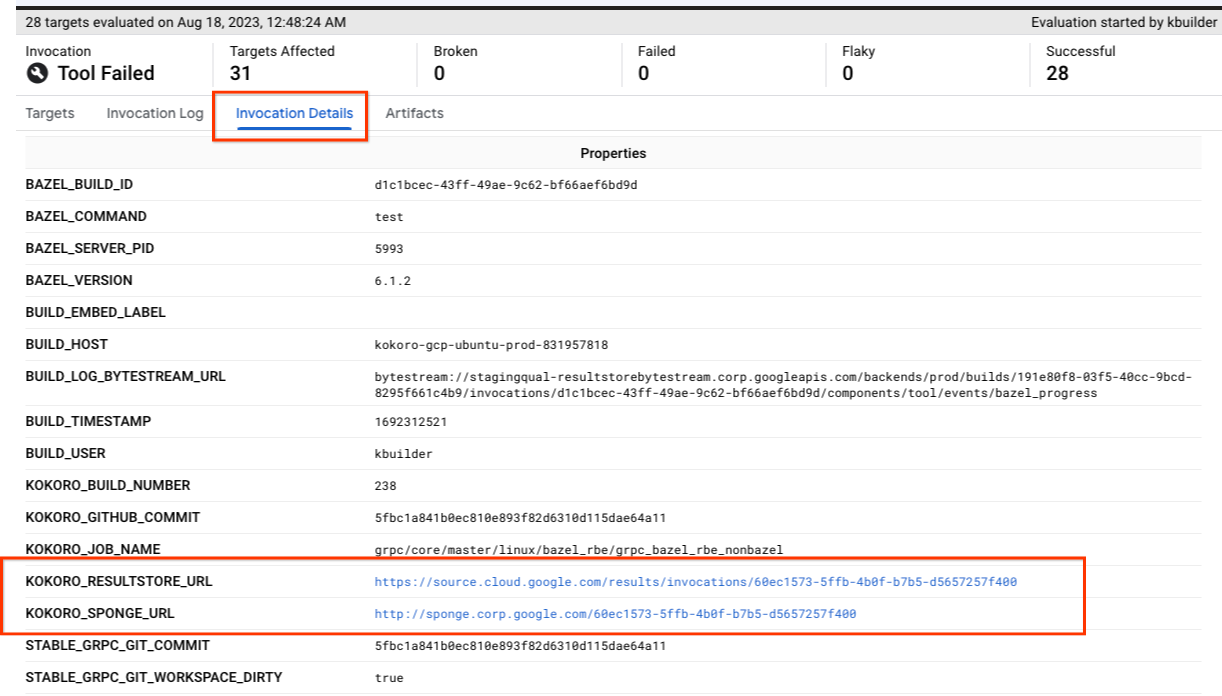
299 lines
10 KiB
Python
Executable File
299 lines
10 KiB
Python
Executable File
#!/usr/bin/env python3
|
|
# Copyright 2022 The gRPC Authors
|
|
#
|
|
# Licensed under the Apache License, Version 2.0 (the "License");
|
|
# you may not use this file except in compliance with the License.
|
|
# You may obtain a copy of the License at
|
|
#
|
|
# http://www.apache.org/licenses/LICENSE-2.0
|
|
#
|
|
# Unless required by applicable law or agreed to in writing, software
|
|
# distributed under the License is distributed on an "AS IS" BASIS,
|
|
# WITHOUT WARRANTIES OR CONDITIONS OF ANY KIND, either express or implied.
|
|
# See the License for the specific language governing permissions and
|
|
# limitations under the License.
|
|
"""Helps with running bazel with extra settings to generate structured test reports in CI."""
|
|
|
|
import argparse
|
|
import os
|
|
import platform
|
|
import sys
|
|
import uuid
|
|
|
|
_ROOT = os.path.abspath(os.path.join(os.path.dirname(sys.argv[0]), "../../.."))
|
|
os.chdir(_ROOT)
|
|
|
|
# How long to sleep before querying Resultstore API and uploading to bigquery
|
|
# (to let ResultStore finish writing results from the bazel invocation that has
|
|
# just finished).
|
|
_UPLOAD_RBE_RESULTS_DELAY_SECONDS = 60
|
|
|
|
|
|
def _platform_string():
|
|
"""Detect current platform"""
|
|
if platform.system() == "Windows":
|
|
return "windows"
|
|
elif platform.system()[:7] == "MSYS_NT":
|
|
return "windows"
|
|
elif platform.system() == "Darwin":
|
|
return "mac"
|
|
elif platform.system() == "Linux":
|
|
return "linux"
|
|
else:
|
|
return "posix"
|
|
|
|
|
|
def _append_to_kokoro_bazel_invocations(invocation_id: str) -> None:
|
|
"""Kokoro can display "Bazel" result link on kokoro jobs if told so."""
|
|
# to get "bazel" link for kokoro build, we need to upload
|
|
# the "bazel_invocation_ids" file with bazel invocation ID as artifact.
|
|
kokoro_artifacts_dir = os.getenv("KOKORO_ARTIFACTS_DIR")
|
|
if kokoro_artifacts_dir:
|
|
# append the bazel invocation UUID to the bazel_invocation_ids file.
|
|
with open(
|
|
os.path.join(kokoro_artifacts_dir, "bazel_invocation_ids"), "a"
|
|
) as f:
|
|
f.write(invocation_id + "\n")
|
|
print(
|
|
'Added invocation ID %s to kokoro "bazel_invocation_ids" artifact'
|
|
% invocation_id,
|
|
file=sys.stderr,
|
|
)
|
|
else:
|
|
print(
|
|
'Skipped adding invocation ID %s to kokoro "bazel_invocation_ids"'
|
|
" artifact" % invocation_id,
|
|
file=sys.stderr,
|
|
)
|
|
pass
|
|
|
|
|
|
def _generate_junit_report_string(
|
|
report_suite_name: str, invocation_id: str, success: bool
|
|
) -> None:
|
|
"""Generate sponge_log.xml formatted report, that will make the bazel invocation reachable as a target in resultstore UI / sponge."""
|
|
bazel_invocation_url = (
|
|
"https://source.cloud.google.com/results/invocations/%s" % invocation_id
|
|
)
|
|
package_name = report_suite_name
|
|
# set testcase name to invocation URL. That way, the link will be displayed in some form
|
|
# resultstore UI and sponge even in case the bazel invocation succeeds.
|
|
testcase_name = bazel_invocation_url
|
|
if success:
|
|
# unfortunately, neither resultstore UI nor sponge display the "system-err" output (or any other tags)
|
|
# on a passing test case. But at least we tried.
|
|
test_output_tag = (
|
|
"<system-err>PASSED. See invocation results here: %s</system-err>"
|
|
% bazel_invocation_url
|
|
)
|
|
else:
|
|
# The failure output will be displayes in both resultstore UI and sponge when clicking on the failing testcase.
|
|
test_output_tag = (
|
|
'<failure message="Failure">FAILED. See bazel invocation results'
|
|
" here: %s</failure>" % bazel_invocation_url
|
|
)
|
|
|
|
lines = [
|
|
"<testsuites>",
|
|
'<testsuite id="1" name="%s" package="%s">'
|
|
% (report_suite_name, package_name),
|
|
'<testcase name="%s">' % testcase_name,
|
|
test_output_tag,
|
|
"</testcase></testsuite>",
|
|
"</testsuites>",
|
|
]
|
|
return "\n".join(lines)
|
|
|
|
|
|
def _create_bazel_wrapper(
|
|
report_path: str,
|
|
report_suite_name: str,
|
|
invocation_id: str,
|
|
upload_results: bool,
|
|
) -> None:
|
|
"""Create a "bazel wrapper" script that will execute bazel with extra settings and postprocessing."""
|
|
|
|
os.makedirs(report_path, exist_ok=True)
|
|
|
|
bazel_wrapper_filename = os.path.join(report_path, "bazel_wrapper")
|
|
bazel_wrapper_bat_filename = bazel_wrapper_filename + ".bat"
|
|
bazel_rc_filename = os.path.join(report_path, "bazel_wrapper.bazelrc")
|
|
|
|
# put xml reports in a separate directory if requested by GRPC_TEST_REPORT_BASE_DIR
|
|
report_base_dir = os.getenv("GRPC_TEST_REPORT_BASE_DIR", None)
|
|
xml_report_path = os.path.abspath(
|
|
os.path.join(report_base_dir, report_path)
|
|
if report_base_dir
|
|
else report_path
|
|
)
|
|
os.makedirs(xml_report_path, exist_ok=True)
|
|
|
|
failing_report_filename = os.path.join(xml_report_path, "sponge_log.xml")
|
|
success_report_filename = os.path.join(
|
|
xml_report_path, "success_log_to_rename.xml"
|
|
)
|
|
|
|
# invoking "bash" explicitly is important for the workspace status command
|
|
# to work on windows as well.
|
|
workspace_status_command = (
|
|
"bash tools/remote_build/workspace_status_kokoro.sh"
|
|
)
|
|
|
|
# generate RC file with the bazel flags we want to use apply.
|
|
# Using an RC file solves problems with flag ordering in the wrapper.
|
|
# (e.g. some flags need to come after the build/test command)
|
|
with open(bazel_rc_filename, "w") as f:
|
|
f.write('build --invocation_id="%s"\n' % invocation_id)
|
|
f.write(
|
|
'build --workspace_status_command="%s"\n' % workspace_status_command
|
|
)
|
|
|
|
# generate "failing" and "success" report
|
|
# the "failing" is named as "sponge_log.xml", which is the name picked up by sponge/resultstore
|
|
# so the failing report will be used by default (unless we later replace the report with
|
|
# one that says "success"). That way if something goes wrong before bazel is run,
|
|
# there will at least be a "failing" target that indicates that (we really don't want silent failures).
|
|
with open(failing_report_filename, "w") as f:
|
|
f.write(
|
|
_generate_junit_report_string(
|
|
report_suite_name, invocation_id, success=False
|
|
)
|
|
)
|
|
with open(success_report_filename, "w") as f:
|
|
f.write(
|
|
_generate_junit_report_string(
|
|
report_suite_name, invocation_id, success=True
|
|
)
|
|
)
|
|
|
|
# generate the bazel wrapper for linux/macos
|
|
with open(bazel_wrapper_filename, "w") as f:
|
|
intro_lines = [
|
|
"#!/bin/bash",
|
|
"set -ex",
|
|
"",
|
|
'tools/bazel --bazelrc="%s" "$@" || FAILED=true'
|
|
% bazel_rc_filename,
|
|
"",
|
|
]
|
|
|
|
if upload_results:
|
|
upload_results_lines = [
|
|
"sleep %s" % _UPLOAD_RBE_RESULTS_DELAY_SECONDS,
|
|
"PYTHONHTTPSVERIFY=0 python3"
|
|
" ./tools/run_tests/python_utils/upload_rbe_results.py"
|
|
' --invocation_id="%s"' % invocation_id,
|
|
"",
|
|
]
|
|
else:
|
|
upload_results_lines = []
|
|
|
|
outro_lines = [
|
|
'if [ "$FAILED" != "" ]',
|
|
"then",
|
|
" exit 1",
|
|
"else",
|
|
(
|
|
" # success: plant the pre-generated xml report that says"
|
|
' "success"'
|
|
),
|
|
" mv -f %s %s"
|
|
% (success_report_filename, failing_report_filename),
|
|
"fi",
|
|
]
|
|
|
|
lines = [
|
|
line + "\n"
|
|
for line in intro_lines + upload_results_lines + outro_lines
|
|
]
|
|
f.writelines(lines)
|
|
os.chmod(bazel_wrapper_filename, 0o775) # make the unix wrapper executable
|
|
|
|
# generate bazel wrapper for windows
|
|
with open(bazel_wrapper_bat_filename, "w") as f:
|
|
intro_lines = [
|
|
"@echo on",
|
|
"",
|
|
'bazel --bazelrc="%s" %%*' % bazel_rc_filename,
|
|
"set BAZEL_EXITCODE=%errorlevel%",
|
|
"",
|
|
]
|
|
|
|
if upload_results:
|
|
upload_results_lines = [
|
|
"sleep %s" % _UPLOAD_RBE_RESULTS_DELAY_SECONDS,
|
|
"python3 tools/run_tests/python_utils/upload_rbe_results.py"
|
|
' --invocation_id="%s" || exit /b 1' % invocation_id,
|
|
"",
|
|
]
|
|
else:
|
|
upload_results_lines = []
|
|
|
|
outro_lines = [
|
|
"if %BAZEL_EXITCODE% == 0 (",
|
|
(
|
|
" @rem success: plant the pre-generated xml report that says"
|
|
' "success"'
|
|
),
|
|
" mv -f %s %s"
|
|
% (success_report_filename, failing_report_filename),
|
|
")",
|
|
"exit /b %BAZEL_EXITCODE%",
|
|
]
|
|
|
|
lines = [
|
|
line + "\n"
|
|
for line in intro_lines + upload_results_lines + outro_lines
|
|
]
|
|
f.writelines(lines)
|
|
|
|
print("Bazel invocation ID: %s" % invocation_id, file=sys.stderr)
|
|
print(
|
|
"Upload test results to BigQuery after bazel runs: %s" % upload_results,
|
|
file=sys.stderr,
|
|
)
|
|
print(
|
|
"Generated bazel wrapper: %s" % bazel_wrapper_filename, file=sys.stderr
|
|
)
|
|
print(
|
|
"Generated bazel wrapper: %s" % bazel_wrapper_bat_filename,
|
|
file=sys.stderr,
|
|
)
|
|
|
|
|
|
if __name__ == "__main__":
|
|
# parse command line
|
|
argp = argparse.ArgumentParser(
|
|
description=(
|
|
"Generate bazel wrapper to help with bazel test reports in CI."
|
|
)
|
|
)
|
|
argp.add_argument(
|
|
"--report_path",
|
|
required=True,
|
|
type=str,
|
|
help=(
|
|
"Path under which the bazel wrapper and other files are going to be"
|
|
" generated"
|
|
),
|
|
)
|
|
argp.add_argument(
|
|
"--report_suite_name",
|
|
default="bazel_invocations",
|
|
type=str,
|
|
help="Test suite name to use in generated XML report",
|
|
)
|
|
args = argp.parse_args()
|
|
|
|
# generate new bazel invocation ID
|
|
invocation_id = str(uuid.uuid4())
|
|
|
|
report_path = args.report_path
|
|
report_suite_name = args.report_suite_name
|
|
upload_results = True if os.getenv("UPLOAD_TEST_RESULTS") else False
|
|
|
|
_append_to_kokoro_bazel_invocations(invocation_id)
|
|
_create_bazel_wrapper(
|
|
report_path, report_suite_name, invocation_id, upload_results
|
|
)
|